Salvation Is Not Private

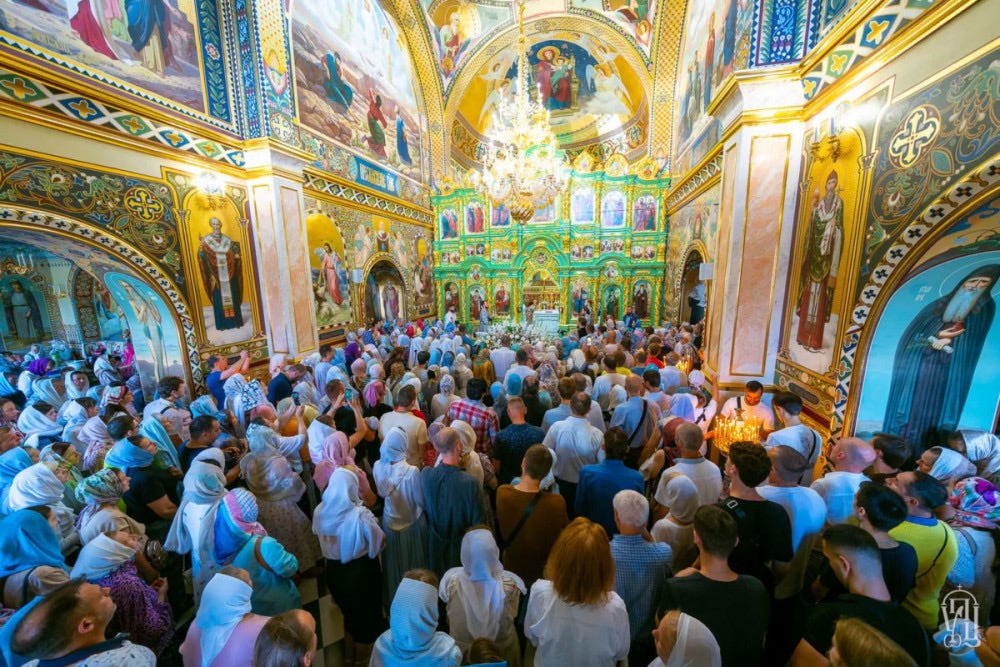
Over the years I have noticed that many Christians speak about salvation in a way that would have sounded somewhat foreign to much of the ancient Church. We often speak as though the central question of Christianity is, “Have I been saved?” That question certainly matters, but when we open the Scriptures we discover that the biblical writers are frequently asking a larger question. They are concerned not only with the individual, but with the people to whom that individual belongs.
This difference may seem subtle at first, but it carries enormous consequences.
Many modern Christians instinctively think of salvation as something that happens primarily between themselves and God. They speak of having a personal relationship with Jesus Christ, and there is truth in that expression. God does not save crowds. He saves persons. He calls each of us by name. Yet somewhere along the way, personal often became private. Faith became something that exists largely within the individual. The Church became a place one attends. Christianity became something a person possesses rather than a life into which he is incorporated.
The Scriptures consistently present a broader picture.
From the beginning, God is not merely gathering isolated believers. He is creating a people. He is forming a household. He is building a family.
This pattern appears much earlier than many Christians realize. When God called Abraham, He was doing far more than entering into a relationship with a single man. The promises given to Abraham immediately extended beyond Abraham himself. They embraced his descendants, his household, and ultimately a people through whom all the nations of the earth would be blessed. From the very beginning, God’s redemptive work had a corporate dimension.
If you find this helpful, consider subscribing. And if you’re already a subscriber, thank you. Whether you’re here often or just passing through, a simple like or restack helps this reach someone who may be quietly searching.
That people became Israel. What is often overlooked is the language God uses to describe His relationship with them. Israel is not presented merely as a nation governed by divine laws. Again and again God speaks of Israel as His son. He is their Father. They are His household.
This family language runs throughout the Old Testament. Even in moments of judgment, God speaks less like a ruler addressing rebellious subjects and more like a Father grieving over estranged children. The prophets repeatedly call Israel to repentance, but they do so within the context of a broken family relationship. God reminds His people that they belong to Him.
The story of Israel is therefore not merely the history of a nation. It is the history of a family. Yet like so many themes in the Old Testament, this one points beyond itself. Israel, God’s son, points forward to Christ, the true and eternal Son of God.
At the baptism of Christ, the Father declares, “This is My beloved Son.” In Him the story reaches its fulfillment. What Israel represented imperfectly, Christ embodies perfectly. He is the faithful Son. He is the obedient Son. He is the Son not by covenant alone, but by nature.
And it is here that the Gospel becomes even more remarkable.
The New Testament repeatedly teaches that through union with Christ we become sons and daughters of God. Saint Paul returns to the language of adoption over and over again. Saint John tells us that those who receive Christ are given the right to become children of God. Once you begin looking for this theme, it appears everywhere.
The apostles do not describe salvation merely as forgiveness, important though forgiveness is. They speak of adoption, inheritance, sonship, and communion with the Father. The believer is not simply pardoned. He is welcomed home.
In Orthodox theology this occurs by grace, though grace itself is often misunderstood. Grace is not merely God’s favorable attitude toward us. It is God’s own activity and presence working within us. It is the life of God communicated to us through the Holy Spirit. Through grace we are united to Christ, and through union with Christ we participate in His sonship. We do not become God by nature, but we truly participate in His life. That is why salvation is far more than a legal declaration. It is entrance into the life of God and communion with the Father.
At this point the modern Christian often asks, “What does this mean for me?” The Scriptures frequently ask a different question.
To whom do you belong?
Into what household have you been received?
Whose family are you now a part of?
The answer given by the apostles is the Church—not merely as an idea, not merely as an invisible association known only to God, and not merely as a collection of individuals who happen to hold similar beliefs. The Church is the household of God. That is Saint Paul’s language, not ours.
The Church is a visible family into which men and women are received through baptism, nourished through the Eucharist, united by a common faith, and gathered around a common Lord.
I have often thought that one of the most overlooked realities in modern Christianity is that no one creates his own family. A child does not choose his parents. He does not determine his inheritance. He does not decide who his brothers and sisters will be. These things are received. They are given.
The same principle applies spiritually. Christians do not create the Church. They do not invent the faith. They do not establish the boundaries of God’s household. They receive what has been handed down.
That reality helps explain why the New Testament places such importance upon baptism. Just as no one gives physical birth to himself, no one gives spiritual birth to himself. The new birth is received. Through baptism God incorporates us into the household of His Son. We are born into a family that existed before us and will continue after us.
The Eucharist reveals the same reality from another angle. Families gather around a table. The Church gathers around a table as well. The Eucharist is not merely a religious reminder. It is the family meal of the Kingdom. At every Divine Liturgy the children of God gather around the table of their Father and receive the Body and Blood of His Son. We do not commune as isolated believers pursuing private spiritual lives. We commune as one Body, sharing one life in Christ.
This helps explain why the Fathers so often spoke of the Church as our mother. A child is born into a family, nourished within a family, corrected within a family, protected within a family, and ultimately matured within a family. The same is true spiritually. Christians are born through baptism, nourished through the Eucharist, instructed through the apostolic faith, and formed through the worship and life of the Church.
Saint Cyprian captured this beautifully when he wrote that no one can have God as Father who does not have the Church as mother. His point was not primarily institutional. It was familial. The God who adopts us does not leave us isolated. He places us within His household.
At this point an obvious question emerges.
If the Church is the household of God, where is that household today?
The question is unavoidable because families possess continuity. They do not disappear for centuries and then suddenly reappear. They do not lose their identity and reinvent themselves every generation. Families endure through time.
If Christ established a household, then that household must possess continuity as well. It must preserve the faith it received, the worship it received, the sacramental life it received, and the apostolic ministry it received.
This is why the question facing Christians is not simply which body can claim antiquity. Several Christian communions possess ancient roots.
The deeper question is this:
Which body remains what the Church always was?
The Orthodox Church claims no special genius, no recovered secret, and no new revelation. Her claim is actually quite simple. She claims not to have invented anything. She claims to have preserved what she received. The faith confessed by the apostles, articulated by the councils, embodied in the lives of the saints, and handed down from generation to generation remains the faith she confesses today.
This does not mean there is no truth outside her visible boundaries. Nor does it mean that everyone outside her communion is cut off from the mercy of God. God alone knows the hearts of men. The Church has never claimed authority over the judgment seat of Christ.
What Orthodoxy does claim is that within her life the fullness of the apostolic faith, apostolic worship, sacramental life, and historical continuity of the Church remain united.
The question, therefore, is not whether God has a family. Scripture answers that clearly enough. The question is where that family is to be found.
The Orthodox answer is the same answer Christians gave long before the divisions of the modern world. The family of God is the Church founded by Christ, preserved by the Holy Spirit, proclaimed by the apostles, defended by the councils, embodied by the saints, and handed down through the generations.
When viewed from this perspective, the biblical story becomes larger and more beautiful than we often imagine. It is not simply the story of individuals seeking God. It is the story of a Father gathering a family around His Son.
That story begins with Abraham, continues through Israel, reaches its fulfillment in Christ, and continues in the life of the Orthodox Church.
For many modern Christians, the Church has become a place one attends.
In the Scriptures, the Church is a family to which one belongs.
Christ did not come merely to forgive our sins.
He came to bring us home.
This is a fitting essay for me today. I was received into the church yesterday as a catechumen.
Your essays have been a continuous guide to me as God led me home.
Thank you!
Thank you for this